
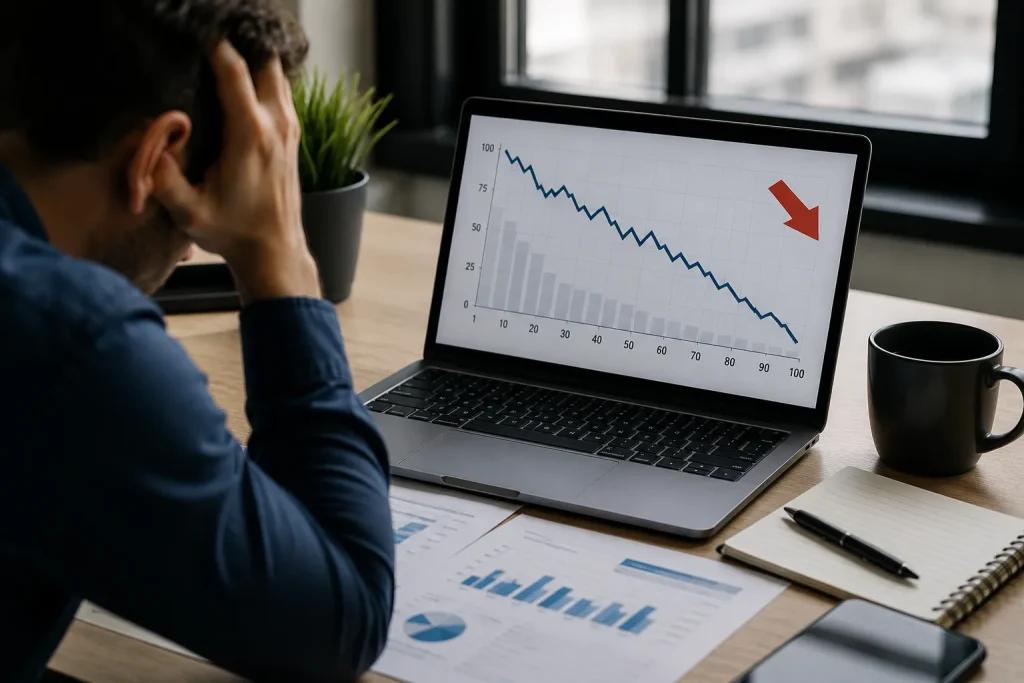
A website should attract visitors from search engines, but many businesses struggle to gain visibility. Google processed more than 8.5 billion searches daily in 2026, making competition stronger than ever. If your Website is not appearing in search results, several technical and content-related issues may be responsible. Understanding these factors helps improve rankings and organic traffic.
Search engine optimization depends on hundreds of ranking signals. Google confirmed that helpful content, page experience, and relevance remain important factors. Even a well-designed Website can fail to rank when it lacks authority, proper optimization, or technical health. Many businesses focus only on publishing content and ignore the elements that influence search performance.
We often see ranking problems caused by weak keyword targeting, indexing errors, poor user experience, and slow loading speed. Solving these issues requires a combination of technical SEO and content improvements. Understanding why a Website struggles in search results allows businesses to create an effective strategy and improve visibility over time.
Common Technical Issues Prevent a Website From Ranking
Indexing Problems and Crawl Errors
Technical SEO problems frequently stop Google from discovering pages. According to Google Search Central, pages blocked by robots.txt or marked with noindex tags cannot appear in search results. XML sitemap errors and broken internal links also affect crawling efficiency.
A Website should have a clean structure and accessible pages. Googlebot prioritizes sites with clear navigation and proper indexing signals. Search Console helps identify coverage issues and crawl errors. Fixing these problems ensures important pages remain visible to search engines and users.
The most common technical problems include:
- Missing XML sitemap.
- Incorrect robots.txt settings.
- Broken internal links.
- Duplicate pages.
- Noindex tags on important pages.
- Server errors and redirects.
Poor Content Quality Limits Website Visibility
Content That Does Not Match Search Intent
Content quality remains one of Google’s strongest ranking factors. In August 2022, Google introduced the Helpful Content System to reward useful information. Pages with thin or repetitive content struggle to gain authority.
A Website should answer users’ questions with clear and accurate information. Articles lacking expertise or original insights often lose visibility. Research by Backlinko in 2025 found that comprehensive content received 77% more backlinks than shorter pages. High-quality pages improve engagement and strengthen topical authority.
Important content improvements include:
- Target one search intent per page.
- Use original examples and expert insights.
- Update outdated statistics regularly.
- Include tables and structured information.
- Improve readability with short paragraphs.
Weak Backlink Profiles Affect Website Authority
Authority Signals Matter in Competitive Niches
Google uses backlinks as trust signals. Websites with stronger authority often rank higher for competitive keywords. Ahrefs reported in 2025 that pages ranking in the top ten positions had an average of 3.8 times more referring domains than pages outside the first page.
A Website without quality backlinks faces challenges when competing against established competitors. Link building should focus on earning relevant references from trusted sites. Guest posts, industry citations, and digital PR campaigns help improve authority naturally. Spam links and purchased backlinks can trigger ranking declines.
| Ranking Factor | Impact on SEO | Recommended Action |
|---|---|---|
| Page Speed | High | Optimize images and code |
| Content Quality | High | Publish expert content |
| Backlinks | High | Build authority naturally |
| Mobile Experience | High | Improve responsiveness |
| Keyword Optimization | Medium | Use relevant search terms |
| Internal Linking | Medium | Strengthen page connections |
User Experience and Core Web Vitals Influence Rankings
Speed and Mobile Performance Matter
Google officially introduced Core Web Vitals as ranking signals in June 2021. User experience now affects search visibility. A Website that loads slowly creates frustration and increases bounce rates.
Research from Google revealed that bounce probability increases by 32% when loading time rises from one second to three seconds. Mobile traffic represented 63.4% of global web traffic during 2025. Responsive design and fast loading speeds are essential for maintaining rankings.
Experts recommend focusing on these metrics:
- Largest Contentful Paint below 2.5 seconds.
- Interaction to Next Paint under 200 milliseconds.
- Cumulative Layout Shift below 0.1.
- Mobile-friendly page design.
- Compressed images and optimized code.
SEO professionals also recommend using caching and content delivery networks to improve speed. Better user experience leads to higher engagement and stronger ranking signals.
Keyword Strategy Problems Reduce Website Performance
Targeting the Wrong Search Terms
Keyword targeting errors often prevent a Website from ranking. Many businesses pursue highly competitive keywords and ignore achievable opportunities. Semrush data from 2025 showed that long-tail keywords generated 57% of organic traffic for small and medium businesses.
Effective keyword research identifies user intent and competition levels. Content should naturally include relevant phrases without over-optimization. Search engines prioritize pages that provide context rather than excessive keyword repetition.
Professional SEO specialists recommend analyzing competitors and identifying content gaps. Supporting pages and topic clusters strengthen authority and improve rankings across multiple keywords. Strategic optimization produces more sustainable growth than targeting broad terms alone. Start your journey with our guide to The Importance of Technical SEO for Website Performance.
Conclusion
Ranking challenges affect almost every Website at some point. Technical errors, weak content, poor authority, and user experience issues are common causes. Google rewards sites that provide useful information and deliver a positive experience.
Businesses that regularly audit their Website and improve content quality gain stronger visibility over time. SEO success requires consistency, data analysis, and continuous optimization. Addressing these factors creates a stronger foundation for long-term search performance and sustainable traffic growth.